You Don t Need Luck T-Shirt Design Review
As a designer who has spent years evaluating embroidery files for everything from boutique branding to holiday gift collections, I approach every new download with a mix of excitement and skepticism. You never know if a file will translate beautifully from a screen to fabric until you actually run it through the machine. Recently, I took a closer look at You Don t Need Luck T-Shirt Design, specifically the St. Patrick s Day variation, to see if it holds up in real-world applications. This isn't just about whether the file opens correctly; it is about how the design behaves on actual garments, how customers perceive the final product, and whether it adds value to your craft business.
First Impressions: Mood and Visual Personality
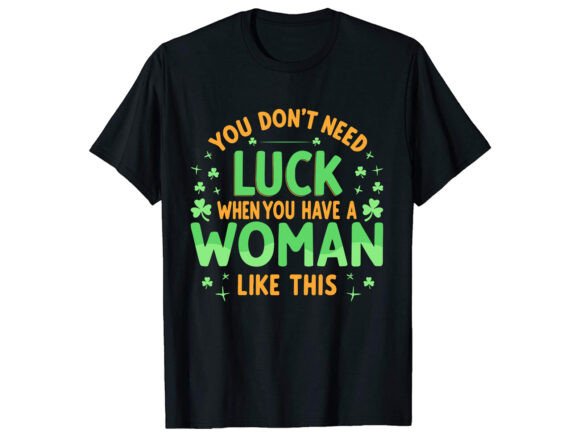
The moment I opened the preview, the energy of You Don t Need Luck T-Shirt Design felt distinct. It captures that specific blend of playful optimism and gritty resilience that defines modern St. Patrick s Day aesthetics. Unlike many generic clover or shamrock graphics that feel dated, this piece relies on strong typography and a confident layout. The phrase itself suggests a narrative, which is exactly what makes for a compelling embroidered patch or apparel statement.
Visually, the design feels balanced. It does not scream for attention with chaotic elements but rather stands firm with a clear message. For an embroidery project, this kind of clarity is crucial. When you are working with machine embroidery design files, the difference between a professional-looking finished product and a cluttered mess often comes down to how well the artist utilized negative space. Here, the text likely anchors the composition, allowing the surrounding elements to breathe. It creates a mood that is perfect for casual wear, festival gear, or a spirited addition to a family outfit during the holidays.
Real-World Application: From Screen to Stitch
I decided to test this design against a practical scenario: creating a line of custom holiday gifts for a local boutique client. The goal was to produce a small batch of high-quality items that would appeal to young adults and families alike. My initial thought was to apply You Don t Need Luck T-Shirt Design to a sturdy canvas tote bag and a soft cotton sweatshirt.
On the canvas tote, the design performed admirably. The bold lines translated well into the fabric texture, creating a tactile finish that invites touch. However, when moving to the sweatshirt, I had to be mindful of the stitch density. Heavy fill stitches can sometimes cause puckering on softer knits if the stabilizer isn't chosen correctly. Fortunately, the clean lines of the text in this file allowed for a lighter touch, reducing the risk of distortion while maintaining the integrity of the lettering.
This versatility extends beyond just clothing. Imagine using this as a central motif on a baby onesie for a "lucky" christening or baptism party, or perhaps on a kitchen towel for a housewarming gift. The phrase is universally understood, making it a safe yet stylish choice for personalized gifts where the recipient might appreciate a bit of wit. In a commercial setting, such as an Etsy listing, having a design that works across multiple categories—tote bag design, sweatshirt embroidery, and even apron decoration—is a massive advantage for inventory management.
Navigating Challenges and Limitations
No design is without its challenges, and being honest about them is part of being a responsible reviewer. While You Don t Need Luck T-Shirt Design is robust, there are specific scenarios where caution is required. If you plan to use this on a curved surface like a baseball cap, the curvature of the front panel can distort straight lines of text. In such cases, a smaller hoop size might be necessary, but you must ensure the design fits within the curvature without losing legibility.
Another critical factor is fabric choice. Thin fabrics, such as lightweight polyester blends or sheer materials, may struggle to support the weight of the thread, especially if the design includes large areas of fill stitch. Similarly, stretchy fabrics require a stabilizer that matches the elasticity of the garment to prevent the embroidery from cracking or pulling over time. Dark fabrics present another consideration; while the design likely includes a colorway for dark backgrounds, the contrast between the thread and the fabric must be sharp to maintain the visual impact.
For those interested in creating an embroidered patch from this file, pay close attention to the edges. If the design features tiny details or intricate corners, they may not hold up well to the cutting and finishing process of a patch. Always test on scrap material first to ensure the running stitch or satin stitch used for the border is sufficient to prevent fraying.
Impact on Brand and Customer Trust
In the world of handmade products, the quality of the embroidery speaks volumes about the maker. A poorly digitized file can lead to skipped stitches, loose threads, or misaligned text, all of which erode customer trust. You Don t Need Luck T-Shirt Design, with its clear structure, supports a high standard of craftsmanship. When a customer sees a crisp, well-executed design on a handmade product, it reinforces the idea that care was taken in the creation process.
This design also enhances brand consistency. Whether you are selling small shop products or building a larger craft business, having a cohesive aesthetic across your collection is key. Using a design with a strong personality helps your brand stand out in a crowded market. It signals to buyers that you understand current trends and have the technical skills to execute them professionally.
Practical Notes for the Embroidery Designer
Before you commit to running a full production batch, here are some essential steps to ensure success with this file:
- Test on Scrap Fabric: Always stitch a sample on a piece of the same material you intend to use. Check for puckering, thread breaks, or tension issues.
- Check Thread Colors: Verify that the thread colors provided in the file offer enough contrast for your specific fabric choice. Sometimes a digital preview looks different than the physical thread.
- Review Stitch Density: Look at the density settings in your digitizing software. If the design is too dense, it may become stiff and uncomfortable. If it is too sparse, it may lack definition.
- Confirm Hoop Size: Ensure the design dimensions fit comfortably within your machine's hoop, leaving enough margin for proper hooping and stabilization.
- Inspect Small Details: Zoom in on the smallest elements of the design. Tiny text or fine lines can sometimes get lost or merge together during stitching.
- Stabilizer Selection: Choose the right stabilizer for your fabric type. Cut-away stabilizers are generally best for stretchy fabrics, while tear-away works well for stable wovens.
- Licensing Verification: Before selling any finished items or offering the design as a digital embroidery file, double-check the licensing terms included with the purchase to avoid legal issues.
Ultimately, You Don t Need Luck T-Shirt Design offers a solid foundation for a variety of projects. It strikes a balance between fun and professional, making it suitable for both personal hobbies and commercial ventures. By understanding its strengths and limitations, you can create finished products that truly resonate with your audience. Whether you are an Etsy seller looking to expand your holiday collection or a hobbyist making a unique gift, this design provides the visual punch needed to make your work stand out.
Remember, the best embroidery projects come from thoughtful planning and careful execution. Take the time to prepare your materials, test your setup, and let the design shine. With the right approach, You Don t Need Luck T-Shirt Design can become a staple in your toolkit for creating memorable, high-quality embroidered goods.